
Short Answer
Learn how to sharpen a box cutter at home with practical methods, know when to replace blades, and avoid common mistakes.
Direct Answer: Can You Sharpen a Box Cutter?
Yes, you can sharpen a box cutter, but the practicality depends on the blade type and your expectations. Most box cutters use replaceable utility blades, which are inexpensive and designed for disposal. However, if you want to extend the life of a blade or you have a fixed-blade model, sharpening is a viable option.
The key is to match the sharpening method to the blade's edge geometry. Utility blades typically have a single bevel, meaning only one side is ground to an edge. This makes them easier to sharpen than double-bevel knives, but it also means you need to maintain the correct angle to avoid ruining the edge.
In this guide, we'll cover several methods, from using a whetstone to a leather strop, and discuss when sharpening makes sense versus replacing the blade.
Understanding Box Cutter Lama Types
Before you start sharpening, identify the blade type. Most box cutters use standard utility blades, which are trapezoidal and have a single bevel. Some models use snap-off blades, where you break off the dull segment to reveal a fresh edge. Altros may have fixed blades that are not meant to be replaced.
For replaceable blades, sharpening can be a cost-saving measure, but it's not always worth the effort. The steel is often hardened to a degree that makes sharpening difficult without proper tools. Additionally, the blade's thin profile can be easily damaged if you apply too much pressure.
If you have a snap-off blade, sharpening is usually unnecessary—just snap off the dull part. For fixed-blade cutters, sharpening is the only way to restore the edge, so it's worth learning the technique.
What You Need to Sharpen a Box Cutter
To sharpen a box cutter, you'll need a sharpening tool that matches the blade's hardness and edge angle. Common options include whetstones, diamond plates, ceramic rods, and even sandpaper mounted on a flat surface. Each has its pros and cons.
A whetstone is a classic choice, offering control and a fine edge. Diamond plates are more aggressive and work quickly, but they can remove more metal than necessary. Ceramic rods are convenient for touch-ups but may not be ideal for heavily dulled blades.
You'll also need a stable work surface, a cloth to wipe the blade, and opzionalely some honing oil or water, depending on the stone type. Safety gear like cut-resistant gloves is a good idea, as the blade is sharp and can slip.
Step-by-Step: Sharpening with a Whetstone
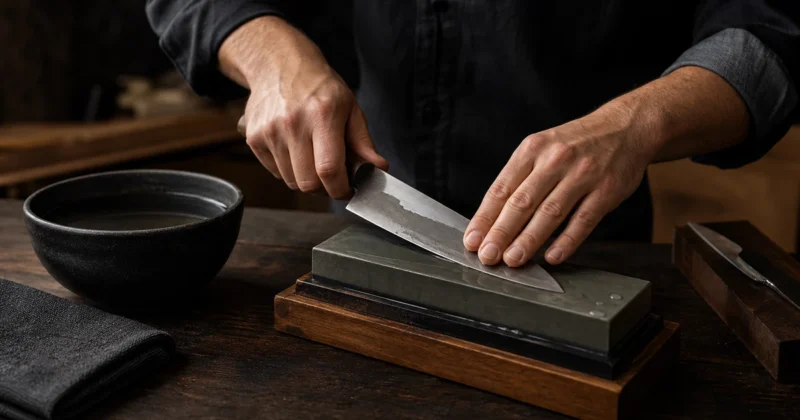
If you're using a whetstone, start by soaking it in water if it's a water stone, or apply honing oil if it's an oil stone. Place the stone on a damp cloth to prevent slipping.
Hold the box cutter blade securely, preferably in a vise or with pliers, but be careful not to damage the edge. Identify the bevel side—the flat side is the back, and the angled side is the bevel.
Lay the bevel flat against the stone, maintaining the original angle. Use a sweeping motion, moving the blade across the stone as if you're trying to shave a thin layer off the stone. Apply light to moderate pressure, and repeat on the same side only, since the back is flat.
After several passes, check for a burr on the flat side. Once you feel a slight burr, you can remove it by lightly running the flat side across the stone. Finish by stropping on leather or a strop compound to polish the edge.
Alternative Methods: Diamond Plates, Ceramic Rods, and Sandpaper
Diamond plates are a faster alternative. They come in various grits, and you can start with a coarse grit to set the edge, then move to a finer grit for polishing. The technique is similar to a whetstone, but you don't need to soak the plate.
Ceramic rods are great for quick touch-ups. Hold the rod at the same angle as the bevel and draw the blade down the rod, as if you're slicing into it. This works best for blades that are slightly dull, not for nicked or damaged edges.
Sandpaper is a budget-friendly option. Tape a sheet of fine-grit sandpaper to a flat surface, like glass or a piece of granite, and use it like a whetstone. This is a good way to try sharpening without investing in specialized tools.
Common Mistakes and How to Avoid Them
One of the most common mistakes is using the wrong angle. If you hold the blade too steep, you'll create a new bevel that is weaker and may not cut well. If you hold it too shallow, you'll round the edge and make it duller.
Another mistake is applying too much pressure. This can overheat the blade, causing the temper to be ruined, or it can chip the edge. Use light, consistent pressure and let the stone do the work.
Skipping the burr removal is also a frequent error. The burr is a tiny wire of metal that forms on the edge; if you don't remove it, the blade will feel sharp but will dull quickly. Always finish by lightly honing the flat side to remove the burr.
Finally, don't forget to clean the blade after sharpening. Metal filings can get into the mechanism of your box cutter and cause it to jam.
When to Sostituisci Instead of Sharpen
Sharpening is not always the best option. If the blade has nicks, chips, or is heavily corroded, sharpening may not restore it to a safe, effective edge. In such cases, replacement is safer and more practical.
Also, consider the cost of your time. If you're sharpening a blade that costs a few cents, and it takes you 20 minutes, it might not be worth it. For high-volume use, replacing blades is often more efficient.
Safety is another factor. A poorly sharpened blade can be more dangerous than a dull one, as it may slip or require more force. If you're not confident in your sharpening skills, it's better to replace the blade.
Finally, some blades are coated with a non-stick or anti-corrosion layer. Sharpening removes this coating, which may reduce the blade's performance and lifespan.
Safety Tips for Sharpening and Handling
Always work in a well-lit area and use a stable surface. Secure the blade so it doesn't move while you're sharpening. A clamp or vise is ideal, but if you're holding it by hand, be extremely careful.
Wear cut-resistant gloves to protect your hands from slips. Also, consider wearing safety glasses in case a piece of metal breaks off.
Keep your fingers away from the edge. When wiping the blade, use a cloth and wipe away from your body. Never test the sharpness by running your finger along the edge; use a piece of paper or a soft material instead.
After sharpening, store the blade properly. If it's a replaceable blade, put it back in the box cutter or a protective case. If it's a loose blade, keep it in a safe place where it won't cause injury.
Final Thoughts: Is Sharpening Worth It?
Sharpening a box cutter can be a rewarding skill, especially if you use a fixed-blade model or want to reduce waste. However, for most people using standard utility blades, replacement is more practical.
If you decide to sharpen, start with a method you're comfortable with, and practice on a blade you don't mind ruining. Over time, you'll develop a feel for the correct angle and pressure.
Remember that a sharp blade is safer than a dull one, but only if it's sharpened correctly. If you're unsure, err on the side of caution and replace the blade.
We hope this guide has helped you understand the options. For more information on cutting tools and maintenance, explore our other resources.
FAQ
Can you sharpen box cutter blades?
Yes, you can sharpen box cutter blades, especially if they are standard utility blades with a single bevel. Using a whetstone, diamond plate, or even sandpaper, you can restore the edge. However, if the blade is heavily damaged or you lack the proper tools, replacement is often more practical and safer.
What is the best way to sharpen a box cutter at home?
The best way depends on your tools and skill level. A whetstone offers the most control and produces a fine edge. Diamond plates are faster but require more care. For a budget option, sandpaper on a flat surface works well. Always maintain the original bevel angle and finish by removing the burr.
How often should you sharpen a box cutter?
There's no fixed schedule; it depends on usage. If you notice the blade tearing rather than cutting cleanly, or if it requires more pressure, it's time to sharpen. For heavy use, you might sharpen every few days, while light use might only need occasional touch-ups. Listen to the blade's performance.
Can you sharpen a snap-off box cutter blade?
Snap-off blades are designed to be broken off to reveal a fresh edge, so sharpening is usually unnecessary. Attempting to sharpen them can be difficult due to their thinness and may not yield good results. It's more efficient to snap off the dull segment and continue using the blade.
Is it safe to sharpen a box cutter blade?
Yes, it can be safe if you take proper precautions. Use a stable work surface, secure the blade, wear cut-resistant gloves, and work slowly. Avoid applying too much pressure, which can cause the blade to slip. Always keep your fingers away from the edge and test sharpness on a piece of paper, not your skin.