
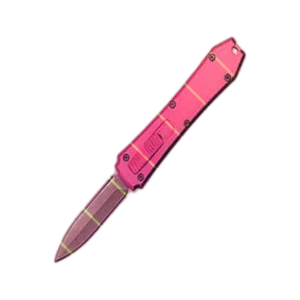
Risposta breve
Sì: piccoli ordini di prova per coltelli OTF sono possibili per acquirenti all'ingrosso quando i coltelli sono in magazzino e l'ordine soddisfa i minimi per modello, SKU o cartone. Personalizzato
Punti chiave
- Le norme sui coltelli possono variare in base a stato, città, tipo di lama, meccanismo di apertura, metodo di trasporto e uso previsto.
- Non considerare un soprannome di prodotto come una categoria legale; verifica le caratteristiche effettive e la normativa locale.
- I rivenditori dovrebbero mantenere un linguaggio legale o di sicurezza fattuale ed evitare di promettere che un articolo sia consentito ovunque.
Termini utilizzati qui
- OTF
- Out-the-front; un design di coltello in cui la lama si muove in avanti dalla parte anteriore del manico.
- Coltello automatico
- Un coltello che si apre tramite un meccanismo a molla dopo che l'utente attiva un pulsante, un interruttore o un cursore.
In questo articolo
- 01 Tabella delle risposte rapide
- 02 Cosa determina la risposta
- 03 Una frase che separa stock da personalizzato
- 04 Modello di politica che gli acquirenti dovrebbero aspettarsi
- 05 Cosa rende gli ordini di prova per coltelli OTF diversi dagli ordini di prodotti generici
- 06 Esempio concreto di ordine
- 07 Come strutturare un buon primo ordine di prova OTF
- 08 What raises the MOQ
- 09 Mistakes to avoid
- 10 Ask your supplier these 3 questions
- 11 What to send when requesting a trial order
- 12 FAQ
- 13 Can I mix blade styles in one small wholesale order?
- 14 Are small trial orders available for private-label OTF knives?
- 15 What is the shortest correct answer?
Yes—wholesale buyers can place a small trial order for OTF knives if the order is made from in-stock articoli and meets the supplier’s unit minimums by model, SKU, or carton. No—or not at the same low quantity—if the order needs private label, custom packaging, or a special production run. This page is for B2B buyers: resellers, distributors, dealers, and OEM/private-label buyers.
In plain terms, the first question is not “What is your minimum dollar amount?” It is what is the unit of control: model, SKU, color, blade style, or carton. For OTF knives, that matters because one handle color or blade profile may be in stock while another variant of the same platform is not.
Tabella delle risposte rapide
| Order type | Can it be small? | Typical MOQ range* | What changes the answer |
|---|---|---|---|
| In-stock trial order | Yes | 12-48 pcs total | Depends on whether minimum is by model, SKU, or carton |
| Mixed variants of one model | Yes, if allowed | Usually 3-12 pcs per SKU within a 12-48 pc order | Works best when all variants are live stock and packed in standard boxes |
| Broken cartons / exact assortments | Sometimes | Higher than standard stock MOQ | Labor and repacking can raise the minimum |
| Private label / logo marking | Limited | Usually 100-300+ pcs per model | Setup cost, marking process, and packaging approval raise MOQ |
| Custom packaging | Rare at trial quantity | Usually 200-500+ pcs | Box printing, inserts, and production scheduling raise MOQ |
*These are representative wholesale ranges used across stock-vs-custom knife programs, not a universal rule for every supplier. The low end applies to in-stock knives shipped in standard packaging. The high end applies when you want broken cartons, exact SKU ratios, logo work, or custom boxes.
Cosa determina la risposta
- Stock status: If the OTF knife is already in inventory, a small trial order is possible. If it must be produced or rebuilt, the MOQ rises.
- Unit of control: Ask whether the minimum is set by model, SKU, color, blade style, or carton. That is the rule that actually controls your first order.
- Variant availability: OTF variants do not move evenly. A black drop-point SKU may be deep in stock while a stonewashed dagger version is nearly sold out.
- Packaging rule: Imballaggio standard supports lower MOQs. Broken cartons, relabeling, or custom assortments increase handling work.
- Destination screening: Automatic knives may require shipment review by country, state, or carrier. A supplier may approve only certain destinations or shipping methods for a first order.
Una frase che separa stock da personalizzato
A stock OTF order ships from existing inventory, while a custom/OEM order creates new production or finishing work—so the custom order carries a higher MOQ.
Modello di politica che gli acquirenti dovrebbero aspettarsi
The most common B2B policy pattern is simple: small trial orders are accepted for in-stock OTF knives in standard packaging, but custom branding, custom boxes, and exclusive variants trigger higher minimums. That is the practical rule to quote internally when planning a first buy.
For example, a supplier may accept a mixed in-stock order because warehouse staff can pick live SKUs from shelf inventory. The same supplier may reject the same quantity if the buyer asks for logo laser marking, a different color box, or an exact repacked assortment, because those requests create separate labor, setup, and QC steps.
You can review current stock-style options in the OTF knife catalog before sending a trial-order request.
Cosa rende gli ordini di prova per coltelli OTF diversi dagli ordini di prodotti generici
OTF knives are not just another SKU-counting exercise. A useful trial order should account for a few category-specific factors:
- Action consistency: Buyers should test whether deployment and retraction feel consistent across the batch. A small trial order is a good time to check switch feel, lockup confidence, and reset behavior.
- Lama-profile sell-through: OTF customers react strongly to blade shape. Drop point, tanto, and dagger variants can sell at very different rates even when the handle is identical.
- Warranty and defect handling for automatics: Ask how dead-on-arrival issues, spring failures, or action problems are handled on automatic knives. This matters more than it would for a simple manual folder.
- Destination screening: Coltello automatico rules vary by market. A supplier may allow a small wholesale order only after confirming legal destination and carrier acceptance.
Those factors are why the best OTF trial order is narrow and deliberate, not a random mix of unrelated models.
Esempio concreto di ordine
Example: A new dealer wants to test one mid-size OTF platform in three live SKUs. The request is 24 pezzi total: 12 pcs black handle / drop-point, 6 pcs OD green / tanto, and 6 pcs stonewash handle / dagger. All three SKUs are in stock, all use standard packaging, and the supplier’s control unit is one model family with mixed-SKU allowance. Outcome: the order is accepted as a trial order because it stays within an in-stock model group and does not require custom work.
That is a strong evidence anchor because it shows the exact condition under which a small order works: one platform, a controlled SKU mix, standard boxes, and no branding changes. If the same buyer requested custom laser marking on the handle or a private-label box, the order would move out of stock-order rules and into a higher-MOQ custom program.
Come strutturare un buon primo ordine di prova OTF
If your goal is to learn what will reorder, keep the test tight:
- Choose 1 to 3 models, not 10 unrelated platforms.
- Within each model, test 2 to 4 variants such as blade profile or handle color.
- Use stock packaging only for the first order.
- Accept the supplier’s carton logic unless exact ratios are critical.
- Track sell-through by SKU, not just by model family.
For OTF knives, testing several variants of one platform usually gives better buying data than testing many different models at once. You learn whether your market prefers, for example, drop point over tanto without mixing in unrelated size, finish, and price differences.
What raises the MOQ
- Private label: Logo marking, branded pouches, or branded paperwork add setup and QC steps.
- Custom packaging: Printed boxes, inserts, and barcode changes usually require a larger run.
- Exclusive finish or hardware: A special colorway or modified clip turns a stock order into a production order.
- Broken-carton assortments: If warehouse staff must repack exact ratios, the low stock MOQ may no longer apply.
- Low-stock variants: If one blade style is nearly out of stock, the supplier may ask you to substitute SKUs or wait for a larger replenishment cycle.
Mistakes to avoid
- Do not ask for “a few of everything.” That is hard to quote and rarely matches model/SKU/carton rules.
- Do not mix stock and OEM assumptions. A stock trial order is not the same as a private-label launch.
- Do not ignore action QC. For OTF knives, the opening and retraction feel should be checked as part of the trial, not after a larger reorder.
- Do not over-test blade styles. Too many variables make the sales result hard to interpret.
- Do not skip destination review. Automatic-knife shipping rules can affect what can be sent and how.
Ask your supplier these 3 questions
- Is your minimum based on model, SKU, or carton?
- Can I mix colors and blade styles within one in-stock OTF model for a trial order?
- What MOQ applies if I add logo marking or custom packaging later?
What to send when requesting a trial order
- Your company type: reseller, distributor, dealer, or private-label buyer
- The exact model or SKU list you want to test
- Requested quantities by color and blade style
- Whether you will accept mixed cartons or only exact ratios
- Your destination country/state for shipment screening
- Whether the order must be stock only or may include future branding options
- Your target reorder timeline if the trial sells through
If you are ready to check live stock and trial-order terms, send the model and SKU mix through the wholesale inquiry form.
FAQ
Can I mix blade styles in one small wholesale order?
Yes, if the supplier allows mixed SKUs within one in-stock model family and the variants are available. The minimum may still apply per SKU or per carton.
Are small trial orders available for private-label OTF knives?
Not at the same low quantity as stock orders. Private label adds setup, marking, packaging, and approval steps, so MOQ rises.
What is the shortest correct answer?
Yes for in-stock wholesale OTF knives that meet model/SKU/carton minimums; no or higher MOQ for custom, private-label, or special-packaging orders.